Abstract
How much is a work of art worth? The factors that determine price are certainly many, from the signature to the dimensions of the piece, but proper weight must also be given to its date.
In the art market, incorrect dating can affect the price, the international movement of the work, and, in some cases, even the validity of the sale contract.
When, however, the artwork is old or has significant artistic value, the issue must also extend to the public authorities and, in particular, to Italy’s Ministry of Culture, which may impose restrictions on export or even on the sale and commercialization of the item.
Italian Council of State judgment No. 4527/2026 concerning the painting depicting the “Madonna col bambino” clarifies the limits on the public administration’s authority, both in exercising administrative self-review powers and as to the disclosure required of private parties.
The Ministry’s mistake and the Council of State’s decision
A painting may be sold with cautious dating, a generic attribution, or a description later disproved by subsequent expert reports and restorations.
The most common scenario is a sale by an inattentive owner to an auction house or to a particularly discerning collector. Once the work’s true value comes to light, courtrooms fill with damages claims and actions for annulment.
But what happens when the mistake is made by the Ministry of Culture?
In a case recently decided by Italian Council of State judgment No. 4527/2026, which also reached the general press (among others, Corriere della Sera covered it here: “Scambiano il «3» per un «8» e non riconoscono il dipinto, così l’opera d’arte italiana del Trecento finisce all’estero e sarà venduta: «Valutata 38.000 euro ne vale più di 500.000»”), a painting was acquired in Italy for €38,558, then exported to Switzerland and later consigned for auction at Christie’s with an estimated value half a million euros higher.
The owner company had purchased at a Pandolfini auction, in 2019, a tempera-on-panel painting depicting the Madonna and Child, presented as “Italian School, 19th century.”
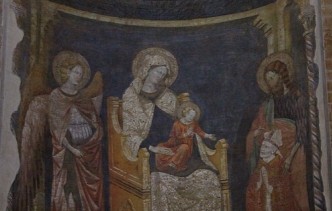
MADONNA CON BAMBINO, tempera su tavola - Dipinto da Alfonso Martorelli Fiori Bologna anno 1350 - dettaglio
In 2020, an application was submitted to the Genoa Export Office for a certificate of free circulation to transfer the work to Switzerland (the procedure was also recently described here: “The Dalí that did not leave: considerations on the law of exporting works of art”). The administration issued the authorization after a few months, after noting the inscription “year 1850” and classifying the painting as a work of some devotional interest but of modest quality. Only after a restoration carried out abroad in October 2022 did the wording “year 1350” emerge on the back, a fact capable of radically changing the work’s historical and artistic significance.
The Ministry of Culture then intervened through administrative self-review, annulling the certificate already issued, denying the new authorization, and initiating the procedure for a declaration of cultural interest, requesting that the sale be suspended.
After the decision of the Regional Administrative Court (TAR), which ruled in favor of the work’s owner, the Council of State dismissed the Ministry’s appeal, finding the intervention untimely and finding no proof of intentional or blameworthy conduct by the owner.
According to the Council of State, administrative self-review could not be based solely on the objective dating error, absent proof that the owner had knowingly or otherwise blameworthily provided false information. In fact, the information submitted by the owner matched the information from the auction house where the work was purchased (Pandolfini), including the declared value.
It is therefore the duty of the public administration to carry out all appropriate checks before granting export authorizations, except where the applicant has falsely represented the facts.
Italian Regulation
Under Italian law, the definitive export of certain items of cultural interest, such as paintings or statues that are more than 70 years old and whose author is no longer living, is governed by Article 68 of the Italian Cultural Heritage Code. The provision states that anyone who intends to permanently remove from the territory of the Republic the items referred to in Article 65(3) must present them to the competent export office, indicating their market value, in order to obtain a Certificate of Free Circulation (ALC). The office issues or denies the certificate, with a reasoned assessment, within 40 days.
This procedure reflects a strong public power, because international circulation is tied to the protection of the national historical and artistic heritage, a value recognized by Article 9 of the Italian Constitution.
Nevertheless, the administration’s power is exercised through a technical assessment governed by rules of procedure and timing. The office must determine whether the item is of cultural interest within the meaning of Article 10 of the Code and must comply with the ministerial guidelines set out in Ministerial Decree No. 537 of December 6, 2017:
- Artistic quality of the work;
- Rarity (in a qualitative and/or quantitative sense);
- Significance of the subject matter;
- Belonging to a historical complex and/or context, artistic, archaeological, or monumental;
- Particularly significant evidence of the history of collecting;
- Relevant evidence, from the standpoint of archaeological, artistic, historical, ethnographic, or relational significance.
When the public administration believes it has made an error, it may resort to administrative self-review, under Article 21-nonies of Law No. 241/1990, which permits ex officio annulment of an unlawful measure where public-interest reasons exist, within a mandatory six-month period (twelve months under the previous version).
After that deadline, administrative self-review is effective only if the decision was made on the basis of false or misleading information. But that was not the case for the dating of the Madonna and Child.
Why the Council of State ruled against the Ministry
The Council of State focuses its ratio decidendi on one precise point: the false representation relevant to overcoming the time limit for administrative self-review must be known, intentional, or at least plainly blameworthy. Without that element, the later emergence of a different date is not enough to shift the risk of the administrative error to the owner.
The company had properly submitted:
- photographs of the work,
- a detailed description of the painting,
- the reconstruction of its provenance,
- a statement of estimated value.
Moreover, all of these were consistent with the information resulting from the Pandolfini auction purchase.
The new elements, by contrast, had emerged only after the restoration carried out abroad, more than three years after the purchase and more than two years after the certificate had been issued.
The judges treated the Ministry’s error in issuing the ALC as falling within the sphere of the administrative fact-finding process, precisely because it was the Commission itself that had ruled out the need for further investigation.
How to avoid a block on the circulation of works of art
If you own a work of art and, for any reason, need to sell it or take it out of Italy, the national procedure is particularly complex and draws many distinctions based on the nature of the work, its value, and the interest that the State may assert in it.
An error in identifying the correct procedure — and the correct permits — can lead to heavy sanctions, restrictions, and administrative challenges even years later. The consequences can be particularly significant: from seizure of the item and the imposition of administrative penalties to, in cases of unlawful export of cultural property provided for by law, criminal penalties consisting of a fine of up to €80,000 and imprisonment from two to eight years (Article 518-undecies of the Italian Criminal Code).
For this reason, the first step is always to carry out due diligence aimed at determining the nature and value of the work.
Where an ALC must be obtained, it will be necessary to prepare detailed documentation to provide the Commission with all information needed to assess the case, including photographs of the work, economic valuation evidence, and, finally, physical presentation of the work.
This is a complex process aimed at preserving the country’s artistic and cultural heritage. Following the rules properly also means reducing risks and uncertainties and giving solidity to completed sale contracts.
Reviewed by: Jenny Ruà
Publication date: 1 July 2026
© Canella Camaiora S.t.A. S.r.l. - All rights reserved.
Textual reproduction of the article is permitted, even for commercial purposes, within the limit of 15% of its entirety, provided that the source is clearly indicated. In the case of online reproduction, a link to the original article must be included. Unauthorised reproduction or paraphrasing without indication of source will be prosecuted.

Gabriele Rossi
Laureato in giurisprudenza, con esperienza nella consulenza legale a imprese, enti e pubbliche amministrazioni.