Abstract
Copyright protects creative works, granting authors both moral and economic rights over their creations. However, protection does not last forever and, depending on the country, different terms may apply.
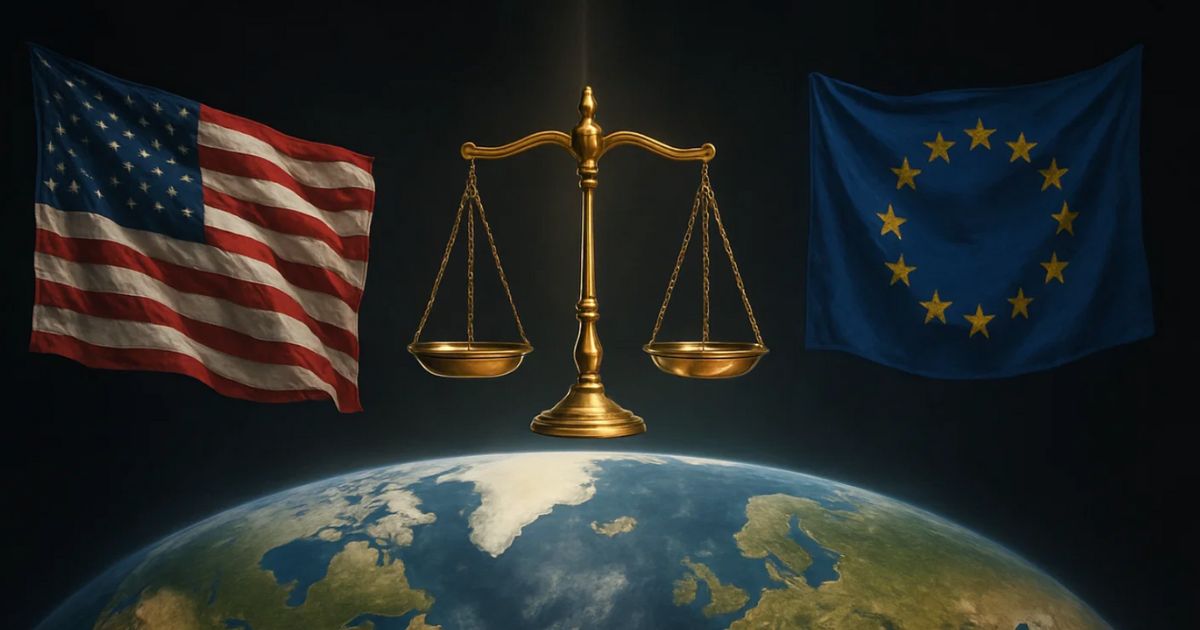
This article provides a brief overview of how copyright works in Europe and the United States, explaining the duration of protection and the criteria governing entry into the public domain.
Particular attention is given to works entering the public domain in 2025, including works by Frida Kahlo, Ernest Hemingway and the Marx Brothers, with a focus on the opportunities — and risks — associated with their reuse.
What is copyright?
Copyright protects creative works of authorship, such as literary texts, musical works, photographs, software, industrial designs and much more. Protection is divided into two categories of rights: economic rights and moral rights. Economic rights allow authors to exploit their works commercially: for example, by deciding whether and how to publish, reproduce, perform or translate them, and by receiving the corresponding remuneration. Moral rights, on the other hand, are connected to the author’s personality and include, among others, the right of attribution and the right to the integrity of the work (for further information, see: Copyright in Italy: scope and mechanisms of protection – Canella Camaiora).
Copyright arises automatically upon creation of the work. In Italy, no registration is required, although depositing a work with SIAE may provide useful evidence by establishing a certain date of creation. In the United States, copyright also arises automatically once the work is fixed in a tangible form, but registration with the Copyright Office is essential in order to enforce rights in court and access certain forms of damages.
However, copyright does not last forever. Protection is limited in time and, once it expires, the work enters the public domain, becoming part of the collective cultural heritage and, as a general rule, freely available for use.
Duration of protection: rules and differences between Europe and the United States
The duration of copyright varies from country to country. The Berne Convention of 1886, signed by more than 180 countries including Italy, establishes a minimum term of protection of 50 years after the author’s death. However, many countries — including EU Member States and the United Kingdom — have extended the term to 70 years post mortem. In these jurisdictions, therefore, works by authors who died in 1954 enter the public domain in 2025, including works by Frida Kahlo, Henri Matisse and André Derain.
In the United States, the duration of copyright varies depending on the date and circumstances of the creation and publication of the work.
In summary, the US system distinguishes between:
- works published before 1978, which are protected for up to 95 years from the date of publication (provided protection was renewed at the end of the initial 28-year term);
- works published after 1978, which are protected for the author’s lifetime plus 70 years;
- anonymous or pseudonymous works, or works created on commission (“work for hire”), which are protected for 95 years from publication or 120 years from creation, whichever period is shorter.
This system is the result of several legislative extensions. One of the most significant was the 1998 reform, informally known as the Mickey Mouse Act: legislation promoted in response to economic lobbying – primarily by the Walt Disney Company – aimed at preventing the loss of copyright protection for iconic characters such as Mickey Mouse.
These differences between jurisdictions mean that the same work may enter the public domain at different times depending on the country. But what does it actually mean for a work to be “in the public domain”?
What does “public domain” mean?
A work that enters the public domain is, formally, free from copyright restrictions. This means that anyone may reproduce, distribute, adapt or reinterpret it without obtaining permission or paying royalties. Public-domain works become a creative resource for publishers, artists, schools and businesses: they can be republished in new editions, used in films, advertising campaigns, video games or educational materials.
However, this freedom is not always absolute. Moral rights, such as the right of attribution and the right to the integrity of the work, survive the expiry of economic rights. This means that, in some countries, moral rights may still be enforced by the author’s heirs even after copyright has expired.
Moreover, some legal systems impose additional restrictions. In Italy and Greece, the State may intervene to protect works regarded as part of the national cultural heritage.
Even where a work is technically in the public domain, its commercial reproduction may require authorisation or even the payment of a fee. A notable example is fashion designer Jean-Paul Gaultier, who in 2022 used Botticelli’s The Birth of Venus for a fashion collection and was faced with legal issues relating to reproduction rights.
So, which works entered the public domain this year?
Works entering the public domain in 2025
In 2025, new works of significant artistic and cultural value enter the public domain and become available for free reuse. In Europe and the United Kingdom, this applies to works by authors who died in 1954. In the literary field, notable names include Jacinto Benavente, winner of the 1922 Nobel Prize in Literature, and Alberto Albertini, an Italian author now being rediscovered for his clear prose. In the music sector, the catalogue of composer and conductor Wilhelm Furtwängler becomes available, while in architecture, the designs of Guido Cirilli enter the public domain.
In the field of photography, particular mention should be made of the powerful images of Werner Bischof, a pioneer of black-and-white photojournalism and a member of the renowned Magnum Photos agency.
In the United States, by contrast, 2025 marks the entry into the public domain of works published in 1929. These include a number of now-legendary works and characters: the comedy film The Cocoanuts, the first feature film starring the Marx Brothers; Ernest Hemingway’s novel A Farewell to Arms, a classic of war literature; and the earliest depictions of Tintin, the adventurous reporter created by Hergé. Iconic popular-culture characters also enter the public domain, including Horace Horsecollar, the comic horse character created by Ub Iwerks for Disney, and the first illustration of Tarzan, the legendary figure created by Edgar Rice Burroughs.
These works therefore become available for publishing, film and cultural projects. However, it is important to remember that economic rights expire only in relation to the original works.
Where derivative works exist, such as translations and adaptations, these do not enter the public domain at the same time as the original work. Indeed, under Article 4 of the Italian Copyright Act, derivative works enjoy independent protection, provided that they possess creative character. They are therefore subject to their own terms of protection and may have different rights holders.
Anyone wishing to exploit a public-domain work commercially should therefore proceed with caution: copyright law is complex, and the mere expiry of copyright does not necessarily guarantee complete freedom to use a work.
With the assistance of a lawyer specialising in copyright law, however, it is possible to navigate safely this rich cultural heritage that becomes available for collective use each year.
Publication date: 1 September 2026
© Canella Camaiora S.t.A. S.r.l. - All rights reserved.
Textual reproduction of the article is permitted, even for commercial purposes, within the limit of 15% of its entirety, provided that the source is clearly indicated. In the case of online reproduction, a link to the original article must be included. Unauthorised reproduction or paraphrasing without indication of source will be prosecuted.

Gabriele Rossi
Laureato in giurisprudenza, con esperienza nella consulenza legale a imprese, enti e pubbliche amministrazioni.